Saturday, January 22, 2011

Snow on Hatteras Island Today. Ferry Service Shut Down


By Jim Field

Dan and I were going to fish today out of Hatteras Inlet. The weather precluded a trip. (I also have to work all this weekend, which would have torpedoed things anyway). Turns out Hatteras got hit with a rather good snow storm--enough to suspend ferry service. Weather tomorrow forecasted for low 40s with sun. Please, may Spring come soon. Here's the story from the Outer Banks Voice:


Heavy snow shuts down Hatteras-Ocracoke ferries
Rob Morris | January 22, 2011
Heavy snow has forced the suspension of ferry service from Hatteras Island.

A coastal storm is causing poor visibility and icing on docks, the state Department of Transportation’s Ferry Division said in a statement.

Temporarily suspended were the Hatteras-Ocracoke, Ocracoke-Cedar Island, Ocracoke-Swan Quarter and Cherry Branch-Minnesott Beach routes.

About an inch of snow was covering N.C. 12 in Salvo, causing several accidents, Dare County reported. The county also said that the Washington Baum Bridge between Nags Head and Manteo and U.S. 264 in Manns Harbor were icy and hazardous

While heavy snow was reported on Hatteras Island, only a few showers and flurries have hit northern beaches.

A winter storm warning is in effect until 10 p.m. Hatteras Island is expected to get 2 to 3 inches of snow before the storm moves away Saturday night.

Farther north, the forecast calls for cloudy and cold weather before things clear out overnight.

Blustery winds will be from the north with temperatures in the mid-30s this afternoon and dropping into the 20s tonight.

After a sunny Sunday, rain is a possibility through at least Wednesday.

Friday, January 21, 2011

On the Hunt in Winter: For Geese, Not Fish. Good Times in the Pit. Some Notable Firsts


By Jim Field

A few Saturday's ago (January 8), Andrew and I traveled to Dan's neck of the woods to hunt for Canadian geese and duck. For years Dan has talked about "The Farm" on Maryland's eastern shore, located about 15 minutes away from Dan's homestead in Bear, DE. Dan, Fran Sr., and a handful of hunting pals--including Jon Kitchen--lease The Farm, a 250+ acre rural tract, from a local land owner. Each year Dan has extended an open invitation to me to hunt--something I've never taken him up on before. However, with Andrew now 14 years and wanting to hunt (i.e., shoot weapons), an open weekend presented an opportunity, and north we drove.

Departing Alexandria at 4:00 am Saturday morning, we proceeded up 95N in snow squalls through Baltimore, across the Susquehanna River, and into DE to Dan's house. Once there, we donned camouflage hunting attire--courtesy of Dan's extra inventory--and hopped in his truck for the brief drive to The Farm. On the way, the scenery was quiet and beautiful: open cornfields, tree-lined boundaries, a dusting of newly-fallen snow. The country.

Having now seen The Farm, I can attest to its beauty and attractiveness to hunters. Rolling fields, trees, all spread out, with a large creek constituting the entire southwest border. Dan and group have built two blinds on the creek, and a single firing pit in the center of a large cornfield, with stalks remaining. This morning we were manning the pit: Jon, son Austin, and Tim Mazol (also a Sea Ya Bea veteran) were on station in one of the blinds on the creek. We would also be joined in the pit by Travis, who I had never met before, and who turned out to be a great guy and outdoorsman, fun and knowledgeable at the same time--and an expert goose caller.

From the truck Dan shuttled Andrew, me, and the gear to the pit using his new 4-wheel toy (sorry, piece of essential equipment). We found the 30+ decoys snow-covered, and so spent time brush-cleaning and re-arranging the artificial flock (positioned face-first into the wind). Dan then instructed Andrew in firing a 12-gauge shotgun--the first time he would do this, or, to be more explicit, fire any gun above a 22 calibre. Dan set an empty cardboard coffee cup on a cornstalk at 20 paces and showed him how to site down the barrel. Andrew fired once: a hit. He fired twice: a second hit. That was that: ready to go.

We next entered the pit--perhaps 15 feet long, 4 feet wide, and 4 feet deep, and took our positions. Tied bundles of corn stalks were positioned overhead to serve as a roof, through which we would emerge--like jack-in-the-boxes--to fire at unsuspecting geese, assuming we could entice them into our field ad directly in front of us, within range.

As it turned out, the early snow had grounded the geese; when they started to fly, the activity centered in the field next to ours; it appeared that this would not be our day. That said, Travis worked the call constantly and we ended up attracting a small grouping, perhaps 10-15 birds. Dan, Andrew, and Travis stood up, got their bearings, choose their birds and fired. We got four, one of which was scored by Andrew.

By noon we were done and packing things up. It was one of the best mornings I'll ever have. Hunting with my son. His first experience with a bird gun, and exposure to the sport and the men who practice and carry on this way of living. Come on, does it get better?

As usual, Dan was a great host. Showing me, once again, something very special, passed down through families and friends, in the great outdoors. Andrew absolutely loved it--everything about it: the gear, the weapons, the surroundings, the companions, the pit conversation, and the kill. He wants to come back and "get really into it." We'll have to make this happen.


Dan begins instruction with Andrew


The young man takes it all in


Ready, aim, fire....for the first time


In the pit--Andrew peers upward


Travis and his caller


Andrew and Dan discussing Greek philosophers


Andrew and his first goose


Retrieving kills from the field

Student, instructor, morning's bag, pit

The two Fields

The essential piece of hunting gear--how cool!


(Thanks Dan--great time, man)

Buddy Davis, Boatbuilder and Pioneer, Dies at 62 Years


By Jim Field

A new fishing friend sent this notice to me. Thought that everyone who loves sportfishing--and the beautiful craft that ply the waters as an integral part of the pursuit--would want to know the news.


Kill Devil Hills Forum
Forums and message boards for Kill Devil Hills, NC.


A Part of Outer Banks Tradition Passes Away
by Kip Tabb on January 17, 2011

Buddy Davis died last night at age 62. With him, a small piece of Outer Banks tradition passed away as well.

Buddy built boats. He, of course, was successful at other things—raised two children and two stepchildren, at one time probably had 200 people employed—but ultimately he will be remembered for that one thing he did as well anyone else in the world. He built boats.

Boatbuilding on the Outer Banks has a long history, from the simple skiffs and fishing boats that plied the inland waters of the North Carolina sounds to the Carolina flare sport fishing boats that have come to define the look of the Outer Banks fishing fleet. With their sharp keel and flared hull, these are boats created for the strong currents of Oregon Inlet and rolling seas of the Gulf Stream. And it was with this design that Buddy made his name.

He started building his first boats in 1973, but by that time he already had a full career on the water. At 13 he was a mate on fishing boats, and he spent a number of years working for Omie Tillet and Warren O’Neal—the godfathers of the Carolina design.

Buddy Davis 28' center console design.
At first, Buddy crafted his boats from the same materials and in the same way that his mentors had, but over time he began to look for new materials and new ways to do things. “He was always trying to do it better,” Barbara Davis, his former wife says. “At first they were wooden hulls. Then he started using fiberglass. His designs were a collaboration with (marine architect) Donald Blount.”

“He was using modern technology to make those traditional designs better,” she adds.

Over the years, Buddy Davis Boatworks took a number of different forms—as an independent company, a partnership, subsidiary and ultimately his designs became a part of a New Jersey boatbuilding company. Davis-designed boats are no longer built on the Outer Banks.

Buddy Davis 48' Express.
Yet it is not for the boats that he will be remembered, although Buddy Davis creations carry a grace, beauty and craftsmanship rare in today’s world, for our physical constructs leave an impermanent mark. It is in the building upon tradition and legacy that our story has meaning, and it is in that tale that the meaning of Buddy Davis’ life will be found.

Buddy, You have crossed the bar for the last time ol friend. God bless the family and especially Barbara, His most devoted companion and wife.


Sunday, December 26, 2010

Washington State: Alderbrook, Bremerton, Puget Sound, Seattle, Pike Place Fish Market. Part II


By Jim Field

After departing the ferry (see post immediately below, Part I), I drove to Pike Place Market to eat lunch at a favorite place and walk through the long line of vendor/product stalls--which include the famous fish stalls. If you've never been to this market, you MUST go--it's one of the most remarkable places on earth, particularly if you like to look at and eat seafood. But first things first: I was famished and headed straight for the Market Grill, a hole-in-the-wall joint, right off the main walkway, where I visit/eat every time I travel to Seattle, no exceptions. What this place offers is uncomplicated: grilled wild salmon, halibut, shrimp, or chicken, presented as a platter or sandwich; clam chowder; and a beverage of choice. I typically order the chowder, a salmon platter, which comes with rice, diced tomatoes, and garlic bread, and then a side order of the grilled halibut. Given that the fish is fresh, one can imagine how good their food is--simply delicious. After eating a ton, I walked to the fish stalls and photographed the incredible variety of fish, shellfish, and other goodies from the sea that are offered--at prices about half of what we pay on the East Coast. Notably, other vendors sell exquisite fruits, vegetables, flowers, and then a vast assortment of other beautiful things, such as local honey, carved wooden objectives, jewelry, pottery, knitted clothing, etc. If only this place was right down my street...

One of my favorite places to eat, anywhere


The owner and chef (never seen anyone else grilling in 10+ years)


Part of my lunch order: the grilled wild salmon platter


Alaskan wild sockeye salmon and halibut fillets


Dungeness crabs lined up all in a row


Next up: king crab legs


Whole Alaskan halibut in ice chips


Wild salmon waiting patiently for a buyer


A view of the meat


Smoked salmon of every type, also jerky (I sampled a lot of this)


Fruit and vegetables...as far as one can see


Unbelievably beautiful (and edible) chili ornaments


You can't imagine the abundance of gorgeous flowers


Flowers, and more flowers...

Saturday, December 25, 2010

Washington State: Alderbrook, Bremerton, Puget Sound, Seattle, Pike Place Fish Market. Part I


By Jim Field

In early November (11-12 to be exact) I traveled to Washington State to work with the Providence Healthcare System and, specifically, give a presentation on health care reform to the boards of directors of a half-dozen of their hospitals located mostly in the southern half of the state. The retreat was held at the Alderbrook Resort and Spa--a beautiful and somewhat isolated place located on a southern branch of the Hood Canal, southwest of Seattle and across Puget Sound. My flight landed at SEATAC around 9:00 pm and I drove about 2 hours in the dark to reach Alderbrook. Once I had traveled to within one hour of the resort, I passed only two cars the rest of the way--so we're talking boonies. About 11:00 am the next day, having finished with my duties, I decided to take the scenic route back to Seattle, given that I was taking the Red Eye home, which didn't depart until 10:30 pm that evening.

My plan was to drive to Bremerton, WA and then board a ferry for Seattle for a ride across Puget Sound. I wanted to see Bremerton--having never been there before--because it is a major homeport for Pacific Coast submarines, and being a former boat sailor, I am always on the lookout to gaze at these machines and see what the various naval bases looks like. The surrounding country is spectacular: pine forests, blue water, and snow-topped mountains. (The photo at top shows a Trident-class nuclear fleet ballistic missile submarine (SSBN) transiting somewhere in Puget Sound.) Driving around the base on the way to the ferry, I was able to spot a few submarines along the pier, only their small black sails barely visible.


One section of Alderbrook Resort, with early morning rain and fog


Map showing Puget Sound's labyrinth of water, islands, channels


My timing was perfect: the ferry to Seattle loaded and departed only minutes after I had arrived and purchased my ticket. The sun appeared and burned the fog away, and a beautiful yet chilly day emerged. The ferry transit to Seattle took about an hour. The passage through a series of relatively narrow channels was absolutely beautiful--again, the 360 degree view of wilderness, water, mountains, etc.

Incredibly, we rounded one point of land, and there, off in the distance, appeared the Seattle skyline, looking every bit like the Emerald City. We tied up at the downtown piers, right next to the pier where we moored back in 1977, when I visited Seattle as a crew member on the USS Blueback (SS-581).

Departing the ferry, I drove up the hill to visit Pike Place Market, the subject of my next posting.


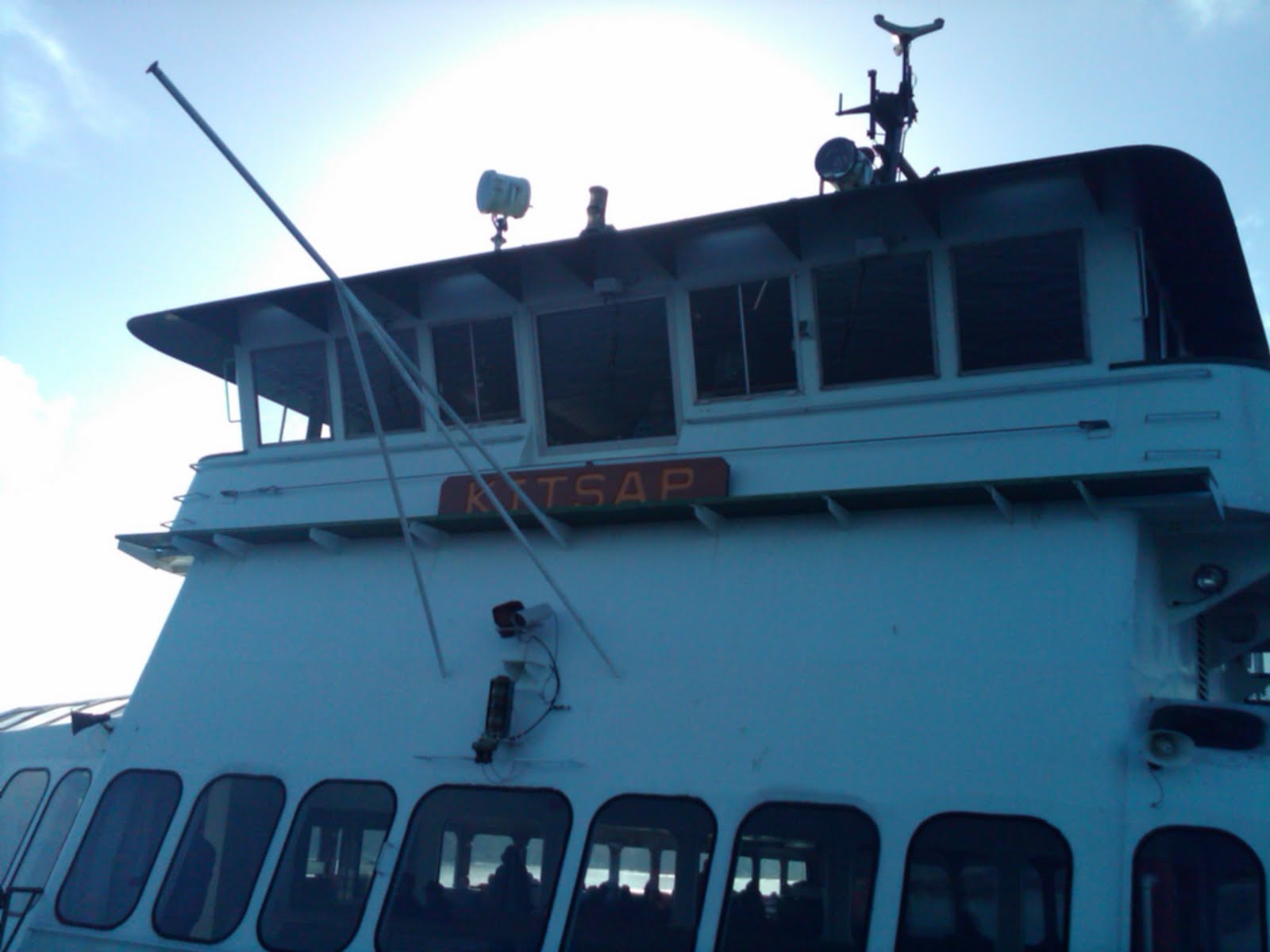
Onboard the ferry Kitsap


Bremerton US Naval Base and shipyard

Transiting down a channel in Puget Sound


Simply stunning scenery in every direction


A sister ferry headed to Bremerton


A first glimpse of downtown Seattle in the far distance


An impressive skyline perched right on the water

Wednesday, December 22, 2010

Red Snapper Fishing Banned Off North Carolina--An Extention of Restrictions


By Jim Field

NOAA recently issued an extended ban on red snapper fishing off of North Carolina, South Carolina, Georgia, and the Atlantic coast of Florida. Next time we bottom fish in Hatteras, we need to ensure we can identify reds from the other snapper species we routinely encounter. Don't want to get in trouble with The Law.

Here's the announcement:

Southeast--NOAA Extends Fishing Ban for South Atlantic Red Snapper; Area Closure to Prevent Snapper Bycatch Temporarily Delayed

In order to protect the red snapper population in the South Atlantic, NOAA Fisheries Service will extend the ban of commercial and recreational fishing for the red snapper in federal waters off North Carolina, South Carolina, Georgia and the Atlantic coast of Florida. This prohibition takes effect December 3, replacing a temporary fishing prohibition due to expire December 5. The final rule authorizing the action recently filed in the Federal Register.

The final rule also includes an area closure off southern Georgia and northeastern Florida, which would prohibit commercial and recreational fishing for snappers, groupers, and some other bottomfish species to reduce bycatch of red snapper. However, this area closure will be delayed until June 1 to allow time to consider the results of a new scientific assessment that the red snapper population may be in better condition than was previously estimated. (The assessment was completed after the South Atlantic Fishery Management Council submitted its request for NOAA’s Fisheries Service to implement the final rule. By delaying the area closure, the agency is providing additional time for the council to review the new scientific assessment and reconsider the area closure.)

The final rule also requires fishermen to use non-stainless steel circle hooks, which can reduce hook-related injuries, when fishing for snapper-grouper species with natural bait in federal waters north of the 28 degrees north latitude. The circle hook requirement becomes effective March 3. For more information, please see Fishery Bulletin.

Tuesday, December 21, 2010

Striper Fact Sheet--Things We Should All Know


By Jim Field

I have been doing a bit of research on stripers for an ongoing project; thought I'd share the fact sheet I put together. What points of learning, you might ask, did I find particularly interesting? Well, the fact that the Chesapeake Bay and its tributaries are the primary spawning and nursery area for 70-90% of the Atlantic coast stocks. That the largest striped bass ever caught was a 125 pound female landed on the North Carolina coast in 1891. That the largest Maryland record fish was 67 pounds, 8 ounces. And the oldest fish ever caught was 31 years of age. Hope you benefit from reading the other bits of information.

Striped Bass
Morone saxatilis
aka Rockfish, Rock, Striper


•Striped bass is a silvery fish that gets its name from the seven or eight dark, continuous stripes along the side of its body.
•Striped bass can grow as long as 60 inches.
•The largest recorded striped bass was a 125 pound female caught on the North Carolina coast in 1891.
•The current Maryland Chesapeake Bay record striped bass is 67 lbs., 8 oz.
•The oldest ever recorded was 31 years of age.

Distribution
•On the Atlantic coast, striped bass range from St. Lawrence River, Canada to St. Johns River, Florida, although they are most prevalent from Maine to North Carolina.
•Striped bass tend to move north to nearshore waters of the New England coast during the summer, and south to the North Carolina/Virginia Capes during the winter.
•The east coast migratory population is composed of three major stocks - Hudson, Chesapeake, and Roanoke.
•The Chesapeake stock:
o The striped bass stock within Chesapeake Bay is composed of pre-migratory fish, primarily ages 10 and younger, and coastal migratory striped bass range in age from age 2 to more than age 30.
o Mature resident and migratory striped bass move into tidal freshwater in early spring to spawn.
o After spawning, migratory fish return to the coast.
o Most spend the summer and early fall months in middle New England near-shore waters.
o During the late fall and early winter, coastal striped bass migrate south to winter off the North Carolina/Virginia Capes.

Food Preference
•Larvae feed on zooplankton.
•Juveniles take in small shrimps and other crustaceans, annelid worms, and insects.
•Adults feed on a wide variety of fishes, crustaceans, squids, mussels, and worms.
•Feeding ceases shortly before spawning.

Spawning
•Female striped bass can mature as early as age 4; however, it takes several years (age 8 or older) for spawning females to reach full productivity.
•Males can mature as early as age 2.
•Once a mature female deposits her eggs, they are fertilized by milt ejected from a mature male.
•Spawning is triggered by an increase in water temperature and generally occurs in April, May and early June in Chesapeake Bay.
•The fertilized eggs drift downstream with currents and eventually hatch into larvae within 2 to 3 days.
•The larvae begin feeding on microscopic animals during their downstream journey.
•After their arrival in the nursery areas, located in tidal reaches of the spawning rivers, they mature into juveniles.
•They usually remain in Chesapeake Bay for two to five years, and then migrate to the Atlantic Ocean.
•With warming water temperatures in the spring, mature fish start their spawning runs in freshwater rivers and streams to complete their life cycle.
•Chesapeake Bay and its tributaries are the primary spawning and nursery area for 70-90% of the Atlantic coast stocks of striped bass.
•Other important spawning areas include the Hudson River in New York and rivers along the North Carolina coast.

Other Facts
•Striped bass (Rock Fish) is Maryland's official state fish.
•This is Maryland's most important commercial and recreational fish species.
•The Atlantic striped bass management program has enjoyed successes like no other. In a little more than 15 years, the resource has rebuilt from a historic low of about 20 million pounds to an historic high of 160 million pounds.
•Striped bass were so plentiful at one time, they were used to fertilize fields.

Monday, December 20, 2010

Bluefin Tuna Retention Limits--Updated Regulations for 2011


By Jim Field

NOAA has issued catch quotas for bluefin tuna going into 2011. I've reproduced the official news release below, but the two key point of learning are as follows:

1) For commercial fishermen, using the General or Charter/Headboat category licenses, from January 1 to January 31, 2011, the allowable limit is 2 large medium or giant tuna per vessel, per day trip. This is reduced from the current number of 3 through January 31, 2010.

2) For recreational fishermen, using the Angling category license, the current limit of 1 fish, measuring 27 to less than 73 inches, remains in effect.


Here's the notice:

The National Marine Fisheries Service (NMFS) adjusts the General category daily Atlantic bluefin tuna (BFT) retention limit to two large medium or giant BFT per vessel per day/trip effective January 1 through January 31, 2011. The default daily retention limit that otherwise would take effect for this category on January 1, 2011 is one BFT.

NMFS takes this action after consideration ofthe regulatory determination criteria at § 63S.27(a)(8) regarding inseason adjustments. Through December 31, 2010, the current retention limit of three large medium or giant BFT per vessel per day/trip remains in effect.

The General category daily retention limit applies to vessels permitted in the Atlantic tunas General category and the Highly Migratory Species (HMS) Charter/Head boat category while fishing commercially. This limit is effective for all areas except for the Gulf of Mexico, which is designated spawning grounds for BFT and where NMFS does not allow targeted BFT fishing.

Regardless of the duration of a fishing trip, the daily retention limit applies upon landing. For example, whether a vessel fishing under the General category limit takes a two-day trip or makes two trips in one day, the daily limit of two fish may not be exceeded upon landing.

NMFS reminds BFT anglers that the default Angling category retention limit of one school, large school, or small medium BFT (measuring 27 to less than 73 inches) will apply effective January 1,2011, and remain in effect, unless and until changed. The Angling category daily retention limit applies to vessels permitted in the HMS Angling category and the HMS Charter/Headboat category while fishing recreational.

Oceanic Glossary: Dolphin


Dolphin: marine mammals that are closely related to whales and porpoises. There are almost forty species of dolphin, varying in size from 4 ft/90 lb (Maui's Dolphin) up to 30 ft/10 tons (the Orca or Killer Whale). They are found worldwide, mostly in the shallower seas of the continental shelves, and are carnivores, mostly eating fish and squid. The family Delphinidae is the largest in the Cetacean order. Dolphins are among the most intelligent animals and their often friendly appearance and seemingly playful attitude have made them popular in human culture. The word dolphin is used in a few different ways. It can mean:

- Any member of the family Delphinidae (oceanic dolphins)
- Any member of the families Delphinidae and Platanistoidea (oceanic and river dolphins)
- Any member of the suborder Odontoceti (toothed whales; these include the above families and some others)
- Used casually as a synonym for Bottlenose Dolphin, the most common and familiar species of dolphin.

Orcas and some closely related species belong to the Delphinidae family and therefore qualify as dolphins, even though they are called whales in common language. A group of dolphins is called a "school" or a "pod". Male dolphins are called "bulls", females "cows" and young dolphins are called "calves"

The following creatures comprise the Family Delphinidae, or oceanic dolphins:

(Note: genus is defined as (1) a category of related organisms usually including several species (2) a class or kind with common attributes.)

- Genus Delphinus
Long-Beaked Common Dolphin
Short-Beaked Common Dolphin

- Genus Tursiops
Common Bottlenose Dolphin
Indo-Pacific Bottlenose Dolphin

- Genus Lissodelphis
Northern Rightwhale Dolphin
Southern Rightwhale Dolphin

- Genus Sotalia Tucuxi
Costero

- Genus Sousa
Indo-Pacific Hump-backed Dolphin
Chinese White Dolphin (the Chinese variant)
Atlantic Humpbacked Dolphin

- Genus Stenella
Atlantic Spotted Dolphin
Clymene Dolphin
Pantropical Spotted Dolphin
Spinner Dolphin
Striped Dolphin

- Genus Steno
Rough-Toothed Dolphin

- Genus Cephalorhynchus
Chilean Dolphin
Commerson's Dolphin
Heaviside's Dolphin
Hector's Dolphin

- Genus Grampus
Risso's Dolphin

- Genus Lagenodelphis
Fraser's Dolphin

- Genus Lagenorhynchus
Atlantic White-Sided Dolphin
Dusky Dolphin
Hourglass Dolphin
Pacific White-Sided Dolphin
Peale's Dolphin
White-Beaked Dolphin

- Genus Orcaella
Australian Snubfin Dolphin
Irrawaddy Dolphin

- Genus Peponocephala
Melon-headed Whale

- Genus Orcinus
Killer Whale (Orca)

- Genus Feresa
Pygmy Killer Whale

- Genus Pseudorca
False Killer Whale

- Genus Globicephala
Long-finned Pilot Whale
Short-finned Pilot Whale


Common dolphin


Spotted dolphin


Bottlenose dolphin


Killer whales (Orcas)

Thursday, December 16, 2010

Blackfin Tuna--The Way It's Meant to be Served


By Jim Field

My good friend and work colleague, Paul Matsui, is a specialist in tuna consumption and sushi/sashimi in general. When I bring home tuna I routinely send some Paul's way, and I know he has enjoyed eating his way through the species--big eye, yellowfin, bluefin, and now blackfin. (Note: big eye was definitely his favorite.) Here's the picture Paul sent me of his table presentation with our latest blackfin catch front-and-center.