Saturday, March 6, 2010

Beautiful Video Clip: Baitball, Mahi and Seal Feeders, and Stripped Marlin


By Jim Field

I am experimenting with attaching video clips to blog posts and haven't figured out the automated technique yet. But I may have been able to do it the old-fashioned way--by having you click into a link. So give this a try. The video is awesome. Click here

What Have We Done to So Anger the Fishing Gods? Are We Not the Chosen Ones?


By Jim Field

Clearly not...the chosen ones. Captured below, the story of our fishing lives this fall and winter, copied straight off of the Diamond Shoals buoy forecast. Weather unfishable Saturday and Sunday. Then changing to a perfect day on Monday--when we smucks return to our desks.

How often does this hhave to happen?! Wha-Wha! Is there no justice in life? Wha-Wha! Can't we ever get a break? Do we not live worthy lives of toil and sweat earning a living for our families, putting ourselves second always? How have we failed? Who have we wronged (i.e., pissed off)?

AMZ152-154-070315-
S OF OREGON INLET TO CAPE HATTERAS NC OUT 20 NM-
S OF CAPE HATTERAS TO OCRACOKE INLET NC OUT 20 NM
INCLUDING THE MONITOR NATIONAL MARINE SANCTUARY-
1024 AM EST SAT MAR 6 2010

SMALL CRAFT ADVISORY IN EFFECT THROUGH SUNDAY EVENING

THIS AFTERNOON
N WINDS 20 TO 25 KT...DIMINISHING TO 15 TO 20 KT
LATE. SEAS 6 TO 9 FT DOMINANT PERIOD 12 SECONDS.

TONIGHT
N WINDS 15 TO 20 KT. SEAS 5 TO 7 FT DOMINANT PERIOD
11 SECONDS.

SUN
NW WINDS 10 TO 15 KT...DIMINISHING TO 5 TO 10 KT IN THE
AFTERNOON. SEAS 4 TO 6 FT.

SUN NIGHT
W WINDS 5 TO 10 KT...INCREASING TO 10 TO 15 KT AFTER
MIDNIGHT. SEAS 3 TO 5 FT.

MON
NW WINDS 5 TO 10 KT. SEAS 2 TO 4 FT.

MON NIGHT
N WINDS 5 KT. SEAS 2 FT.

Now I lay me down to sleep, and pray the Lord my soul to keep.......

Commercial Shipping Captains Not All That Happy--Keep Your Distance!


By Jim Field

Keeping us up-to-date on the global shipping industry--those merchants we observe and navigate around as sportfishermen--Maersk shipping lines reported 2009 financial results that under-impressed as a result of the recent and ongoing collapse in global trade. Their annual report revealed some interesting facts about their business that we might appreciate (in our quest for knowledge about all things aquatic):

- Maersk is the world's largest freight shipping company, founded in 1904
- It's container shipping business lost $2.1 billion in 2009
- Like other carriers, Maersk invested heavily in new ships during the boom in the 2000s
- Now it has a surplus of ships, contributing to a global oversupply at a time when trade is undergoing its worst slump since WWII
- - The industry has laid up ships, reduced staff, and cut costs in various ways, including avoiding the Suez Canal and reducing cruising speeds
- About 12% of the world fleet is idle
- Financial recovery for the industry is predicated on decommissioning ships and therefore reducing supply
- Maersk also wants to do more "backhaul" business--lower paying work involving shipping empty containers back to exporting nations
- The "fronthaul" business, in contrast, is more profitable but also more competitive

Photo for the Day--Keeping Our Minds on Fishing Days to Come

By Jim Field

Thought we could all use a visual reminder of what lies just ahead with the warmer weather and, ideally, fairer winds and seas this spring. Also, with the Sea Ya Bea's return to Hatteras Village, upcoming access to Bottom Fish. Yeah!

What do we have in the photo below? Well, it's Dan performing weight-lifting reps with a double-header of blue-line tilefish. Fran (Sr.) provides backup should Dan's guts wind up on the deck due to invoking a massive hernia. Seriously, let's look beyond the tasks at hand and make an effort to get some time where we belong--on the big blue highway!

Thursday, March 4, 2010

Will Atlantic Bluefin Tuna Survive? Fate Currently at Stake. Tracking What's Happening


By Jim Field

We currently are living in a window--measured in the span of a few years--when the fate of the Atlantic bluefin tuna will be decided for all time. In the last year, I have started to read articles about this catastrophe in the newspapers, learning just enough to know that man is fiddling while Rome burns. Starting today, I will post everything on this topic that I come across. Most of the information is fascinating--details about the fish and their populations that you would think sportfishermen would want to know. It is also fascinating in a macabre way--like watching a car crash: you don't want to see it happen but you can't turn away. Through ignorance, greed, manipulation, the effects of poverty, and the apathy of government officials worldwide, the bluefin tuna have been decimated around the globe, numbers plummeting in the last decade in particular.

In the text below, I've reproduced a news release from the U.S. government on its position relative to international efforts to protect bluefin tuna. Forget the bureauctratic details and maneuvering, look for the facts about the fish themselves, the good and bad guys, the state of the fishery, and the probable implications for all of us.

Here's a primer to help make sense of it all:
- There are two international bodies holding the fate of the tuna
(1) CITIES--don't know much about this group
(2) ICCAT--a weak entity constantly caving in to interests--especially European interests
- There are two populations of tuna being managed (that's a leap of faith) separately:
(1) the Eastern Atlantic and Mediterranean
(2) the Western Atlantic
- There are good guys: Western stock fishermen (our guys keeping to the quotas)
- There are bad guys: Eastern stock fishermen (the no good cheating Europeans)

Okay, here's the announcement from Tom Strickland, an Assistant Secretary of the Interior over Fish, Wildlife and Parks:

Part I: the Bureaucratic Setup:

Strickland Announces Continued United States Support for International Proposal to Protect Bluefin Tuna

WASHINGTON, D.C. – The United States will continue its support for a proposal to ban all international commercial trade of Atlantic bluefin tuna at this month’s meeting of the Convention on International Trade in Endangered Species of Wildlife Fauna and Flora (CITES) in Doha, Qatar, Assistant Secretary of the Interior for Fish and Wildlife and Parks Tom Strickland announced today.

Strickland, who will head the U.S. delegation to the 15th Conference of Parties (CoP15) of the 175-nation treaty, initially announced support for the proposal last October, but left open the possibility that the United States could modify its position if the International Commission for the Conservation of Atlantic Tunas (ICCAT) adopted significantly strengthened management and compliance measures during its November 2009 meeting. “Under the leadership of NOAA, the United States entered the meeting seeking the strongest possible agreement for the conservation of eastern Atlantic and Mediterranean bluefin tuna. We recognize that the parties to ICCAT took some unprecedented steps,” said Strickland. “However, in light of the serious compliance problems that have plagued the eastern Atlantic and Mediterranean fishery and the fact that the 2010 quota level adopted by ICCAT is not as low as we believe is needed, the United States continues to have serious concerns about the long-term viability of either the fish or the fishery.”


Part II: The Decimated Stocks
The Atlantic bluefin tuna is highly prized, especially for sashimi, and a single fish can be sold for tens of thousands of dollars. (Photo at left of Japanese fish market.) The Eastern Atlantic and Mediterranean stock is threatened by overharvesting, which includes illegal, unregulated, and unreported fishing. In the Atlantic Ocean, bluefin tuna are managed as two separate stocks, an Eastern Atlantic and Mediterranean, and a Western. The Eastern Atlantic and Mediterranean stock of the Atlantic bluefin tuna has declined steeply during the last 10 years. Based on estimated catches, scientists estimated the spawning stock biomass in 2007 to be 78,724 metric tons. This contrasts with the biomass peak of 1955, at 305,136 metric tons. The decline over the 50-year historical period ranging from 1955 to 2007 is estimated at 74.2 percent, the bulk of which (60.9 percent) took place during the last 10 years.

The Western Atlantic spawning stock has declined by 82.4 percent from 49,482 metric tons in 1970 to 8,693 metric tons in 2007. During the past decade, the Western stock has stabilized at a very low population level. Many experts correlate this stabilization to adoption of rigorous science-based catch quotas and other management measures together with effective monitoring and enforcement. Such measures ensured strict compliance with ICCAT’s ruled by the U.S. fleet.

Strickland noted that the parties to ICCAT took positive steps at the November meeting. These steps included a commitment to set future catch levels in line with scientific advice, to shorten the fishing season, reduce fishing capacity, and close the fishery if the stocks continue to decline. However, in light of the serious compliance problems that have plagued the eastern Atlantic and Mediterranean fishery and the fact that the 2010 quota level adopted by ICCAT is not as low as needed, the United States will support the proposal to list Atlantic bluefin tuna in Appendix I at CoP15 [meaning a ban on all commercial trade]. If the bluefin tuna is listed under Appendix I, commercial fishermen in the United States could continue to sell western Atlantic bluefin tuna caught in the U.S. Exclusive Economic Zone (EEZ)domestically. Fishing in the EEZ is tightly regulated in the United States to ensure that it meets the ICCAT science-based quota. The United States is both a consumer and a net importer of Atlantic bluefin tuna. Strickland indicated that the United States will explore measures to assist fishermen if international trade is restricted.

“We understand the frustration of our U.S. fishermen who have followed the scientific recommendations and regulatory provisions of ICCAT for many years while their counterparts in the eastern Atlantic and Mediterranean have often overfished and engaged in ineffective management,” Strickland said. “The U.S. government is committed to working with our many international partners to continue to rebuild Atlantic bluefin tuna and ensure sustained conservation and management of the species into the future.”


When you read this, you have to wonder: what chance do the fish really have?

New Boat Search Is On: Formal Announcement of Intentions (Yes, It's Crazy)


By Jim Field

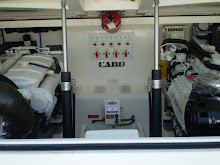
Today I am formally undertaking a 2010 initiative to find and acquire a new boat. (Let's see how long it takes for Diane, my wife, to pick up on this.) Don't get me wrong, I love my Cabo 35, and would be more than happy to own it for the remainder of my fishing days. But that said, change is good in life; a challenge is good in life; and every once in a while you have to mix things up. At least, that's what I'm thinking (I don't assume every reader will agree, if you get my gist). But what the hell, sometimes it's just time to do something different. Okay, radically different.

Five years into fishing now, and owning and running a boat, and looking at other boats doing the same thing, what I've come to realize is that bigger is better, up to a point, for a host of different reasons that we should all know and appreciate. Also, as with other high-ticket items, new boat prices have a huge built-in premium, which for most of us translates into a smaller boat for what we can afford to shell out.

Alternatively, one can find used boats of a good length for a reasonable amount of money. The equation: affordable length is inversely proportional to age of boat. Also, as I understand now, and only with the benefit of time on the water, if you wish to pursue sportfishing seriously, there are some incredibly cool boats out there for doing this--particularlt custom Carolina-design boats that, for me, set the mark. Period; say no more.

We see these boats down south, and we consider them to be the ultimate fishing machines. We fantasize about fishing on one. Sure, we say, maybe in another life. Well maybe so....but today I'm going to start down the path of looking for one, and see how it goes. Maybe it doesn't work out. Maybe it does. We'll just have to go for it, and see what happens. Better to be in the game than on the sidelines. May fair winds prevail.

Here's what I'm after for an upgrade: (none of the criteria are negotiable)

- a working sportfishing boat, which may or may not look "shiney"
- length at waterline >45 feet
- between 10 and 15 years old
- price <$450,000 (ideally <$400,000)
- custom-built in North Carolina
- mechanically rock solid

That's the sum of it. Sounds straighforward, right? Also, it's got to be a contingency sale, i.e., I have to sell mu current boat before moving into the new one. So a double-deal necessary.

I'm currently working with a very motivated broker in North Carolina. Yesterday he sent me a few boats that he thought met my crtieria and he wanted me to look at. I've posted their photos below.

54' Jarrett Bay Sport Fisherman
• Year: 2000
• Current Price: US$ 359,000 (10/09)
• Located in Atlantic Beach, NC
• Hull Material: Composite
• Engine/Fuel Type: Twin Diesel
• YW# 1842-1816150


47' Buddy Davis Convertible
Year: 1996
Current Price: US$ 419,000
Located In Fort Lauderdale, FL
Hull Material: Fiberglass
Engine/Fuel Type: Twin Diesel
YW# 1359-1807787


Success in Bahamas--Government Rules Against Purse Seine Fishing


By Jim Field

Chalk one up for the fish....for now. Confronted by a wave of resistence to a petition to allow purse seine fishing--a method involving the dragging of nets at deep depths, catching anything in the nets' path, indiscriminately, producing, predictably, a huge bycatch of billfish and other endangered species--in its waters, the Bahamian government decided to reject the idea. May the record show that I, your humble writer, did send an email to Minister Cartwright (his portfolio??), asking him to demonstrate courage in the face of commerical fishing interests and think instead of the fish--and, oh yes, almost forgot, also the BIG BUCKS that flow into his country from tourism and sportfishing!

Here's the celebration message form the Billfish Foundation:

The Billfish Foundation wishes to thank all of you who spoke out against the issuance of a permit for purse seine or net fishing to operate in Bahamian waters and to applaud the Bahamian government for rejecting the petition.

A public meeting was held Monday evening (March 1, 2010) and the overwhelming majority of those present spoke out against issuing a permit. After the meeting, the government issued the following statement:


"Having regard to the importance of sportfishing to the Tourism Industry...legislation will prohibit the use of purse seine or net fishing to ensure that all fisheries resources, including migratory fish, are maintained at a sustainable level."

TBF President Ellen Peel and scientist Russell Nelson sent a strong statement that was read during the course of the meeting. Peel and Nelson both argued against the possibility of authorizing the use of purse seine gear or net fishing in the waters of the Bahamas. They cited not only the irreparable harm such practices would cause to billfish resources and other marine species, but also the negative impacts to sportfishing tourism.

A job well done to the TBF folks. If I had real money, I'd quit my current job and go do what they're doing for the planet and our sport.

Saturday, February 27, 2010

Who's Reading This Blog Anyway?


By Anonymous

Sadly the data are in, and enough time has passed to reach a scientific conclusion about the efficacy of photographs such as this to attract and retain readers to our blog. On the bright side, there is no evidence that this type of blatant and crass ploy has turned away eyes. Personally, I didn't think this would happen, but now we have confirmatory objective data, and not just my own beliefs (however prescient and on-target). That said, on a downright depressing note, the data do not show that "fishing babes" (is this term PC?) have the ability to drive hordes of new readers, or for that matter, any new readers to our site.

With these conclusions now "hard facts," a question goes out to the Crew. Should we discontinue the Fishing Babe post category, given that they appear to lend zero value to the site's inherent appeal? Or do we continue with a fruitless investment in their creation, in the hope that someday, somehow, they might deliver a return? I leave it up to the Crew's impeccable good judgement.

New Blog Feature: Diamond Shoals Weekend "Fishability" Tracker! Also: How We Get Royally Screwed

Station 41025 (LLNR 640) - Diamond Shoals
35.006 N 75.402 W (35°0'22" N 75°24'7" W)


By Jim Field

As weekend sportfishermen (that's us!) we live and die by weather conditions that happen to develop--by pure chance, of course--for the weekend: 2 days out of 7, or 28.6% of daily fishing opportunities in a week. Given this highly circumscribed time frame, imposed upon us by the twin commitments of work and family--and, why not go to the beginning, to the unfortunate fact that none of the Crew is the deserving beneficiary of inherited wealth--it's often the case that we get screwed, royally screwed. Why is this the case?

Well, for starters, weather is unpredictable--I mean, it sets the benchmark on uncertainty. If (1) you can only fish on certain days of the week, and (2) these designated days make up just over a quarter of days in a year, and (3) good weather develops randomly, and (4) is a subset of potential weather patterns, and (5) you can only fish in good weather, then walla--do the math!!!!--you're not going to end up on the water very often! (Meaning, you're getting screwed.)

And then there's a second form of "getting screwed" to consider. The process goes like this: in arranging a fishing weekend, we spend valuable spousal capital to get a "free pass" for an upcoming weekend. (These chits, I'll note, are difficult to secure.) Then the weekend rolls around and the weather is, let's say, terrible. So, you don't go fishing, and you don't use the free pass, but--and here's the catch!--you are unable to hand it back at face value. Oh nooooo! Because you asked for the pass, and received it, and the weekend agreement was in fact consummated, you wind up using some of the free pass' goodwill. So, next time around, getting a free pass will be even more difficult--because in not going fishing, you nevertheless had reserved and been bestowed time to fish, and so you used 20% of the pass, which is applied by one's spouse as a weighting factor in determining the odds of fishing in the future. Now that, in my book, is also getting royally screwed, part II.

In our group commiserations, about the punitive nature of imposed marital scheduling practices, and in particular, the cruel fates of fishing weather, we have noted, however, our impression that weather patterns this last fall have been particularly unkind to us, the weekend sportfishermen. Not that we're developing a persecution complex, or anything, but it is beginning to get us down. Now, we don't have data on this, but it seems as though at least 50%, maybe as high as 60%, of absolute weekends have been purse washouts, with even higher percentages applicable to weekends we explicitly reserved for an outing.

Alas, upon awakening this morning, and checking out the weather, and finding it, predictably, just horrible (insert primordial yell: Ahhhhhhhhhhhh!), I'm thinking that we should bring some science to this whole issue. Instead of guessing the record on weather, perhaps if we had hard data, we could turn this in our favor. Specifically, if we could quantify our bad luck, perhaps this would create some spousal empathy for our plight, and we could use this to (1) secure fishing weekends more easily and with enhanced flexibility built in, and (2) help restore full value of our returned free passes.

So, from this day forth this blog will track weather at Diamond Shoals buoy for each weekend across the year (we can also do this for the Delaware light ship buoy). This new blog feature can be found in the right-hand column, at the very bottom, the last box of test. The data collected and shown will be presented as follows, using this weekend as an example:

February 27-28
Reserved: No
Sat--WDIR WNW, WSPD 31.3 kts, WVHT 12.8 ft
Sun--
Verdict: Unfishable

Personally, this will be fascinating to track. I mean, what other Crew has this kind of data on hand? It could really make science work for the betterment of mankind (i.e., us). I'm certainly going to make sure that my "loving spousal unit" (LSU) is kept appraised of the latest aggregated numbers.

Wednesday, February 24, 2010

Day Trip to San Diego: Part II. Memorial to the Tuna Fleet

By Jim Field

This is the second entry from my day trip to San Diego a few weeks back. The first entry introduced the esteemed San Diego Marlin Club. Well, right down the road on Shelter Island, right along the channel leading from the harbor to the ocean, on an absolutely beautiful spot of dry land, I came across a monument--the "Tunaman's Memorial"-- to San Diego's historic tuna industry--and in particular to the men who served in this fleet, and among them, those who over the years were lost at sea. Tuna as big business in San Diego goes back to the previous century. At one time, perhaps spanning the 1930s to 1970s, the fleet was comprised of hundreds of boats. During World War II, if fact, many of the boats were commandeered by the US Navy and posted into action throughout the Pacific.

The monument is large but not Sovieteque in proportions. It's compact and very nicely done. On the marble wall where names are carved, the following inscription is written:

"Remembering those that built an industry and remembering those that departed this harbor in the sun and did not return."

God Bless these men. Today the fleet is mostly gone, as are the fish they went to sea to catch and kill; alas, they did their jobs way too well. What is left--for one, this arresting yet hollow recreation--cannot convey what it must have been like in the heyday of tuna fishing--the scores of boats, the legions of men, the commerce and money and wealth, the accidents, and the beauty and cruelty of it all.

Bringing in the big ones--rod, reel, muscles, and backs


Another vantage point, looking toward the channel


The wall with inscribed names of Captains, boats, and the lost


The most-recently departed (photographer reflected)

Tuesday, February 23, 2010

Repairs at Pirate's Cove--Ready to Go! Newport News Scallop Fleet Photos

By Jim Field

Today I drove down to Pirate's Cove with a single purpose in mind: to get the Sea Ya Bea's generator up and running again. Mission accomplished. Left the house at 5:00 am and met Danny the mechanic from Gregory Poole Power Systems (out of Wanchese) pier side. Danny is an ace with Westerbeke's, and had it running in 10 minutes. Problem turned out to be loose connections on the bus bars due to screws backing off over time with vibration. He then went on to check out fuel filter, impeller, heat exchanger, belt, and replaced single zinc. Spoke to me about care and maintenance tips. Fantastic guy! Will use him again--every time.

(Note: yesterday Danny worked on a new-construction Spencer 52, installing Cat engines rated at 1,900 horsepower each. He said the engine room was beautiful.)

The day was overcast, windy and chilly. Yesterday was 55 and warm. The marina was dead--no one around. I performed some other maintenance items (Clorox bleach in fresh water tank, fuel treatment additive in fuel tank, checked lines), and then headed back.

Working my way through Norfolk, and then upon exiting the tunnel into Newport News, I spotted a fishing fleet to my immediate right and exited the highway. I had noticed these boats before, just never had time to stop. Today I did. I walked up and down the peer and found some men working on one of the boats. I asked what the fleet fished for. One man, a friendly sort, said scallops. Here's a few other things he told me:

- there are about 450 permits for scallop fishing on the east coast
- about 20 part-time permits
- the fishery is highly regulated
- he has been Captain of his boat for 20 years, but did not own it
- he fished off Cape Cod mostly; they rotate the open fishing grounds
- can fish as north as Newfoundland
- his boat hadn't been out since September 10
- I asked him how they made a living at this
- he responded: you make a lot when you catch them
- he volunteered that he made $120,000 a year from this, working 6 months

Up close, many of the boats are battered and ill-kept. Remember: every year we hear about scallop boats sinking off Maryland and Virginia, attributed by survivors to poorly-maintained vessels.

Here are a few pictures from today:

Repaired, fueled, filled, charged, and ready to go


The fairway at Pirate's Cove--very, very quiet


One of the veteran scallop boats


Man who owns these, owns five more just like them

Heavy planers at top are lowered into water for stability


Controlling the moving rigging from a protected house


All in all, a good day today. Let's pray for time to fish and good weather.

Friday, February 19, 2010

The Dixie Arrow--Dan's "Go To" Wreck. Putting Flesh on the Rusting Bones


By Jim Field

On the subject of ship wrecks (see prior post on the USS Monitor), I thought I would put together a piece on the Dixie Arrow, which we oftentimes visit--right out of the gate--upon clearing Hatteras Inlet on the way to deeper water heading ESE on the compass rose. On a few visits, we've been very successful, catching dozens of triggerfish, sea bass, cobia (a "free gaff" courtesy of Dan)and other wreck dwellers. We've also seen swarms of amberjacks and the occasional huge shark. Conversely, on other visits we've come up short (that's fishing, right?). From a fisherman's perspective, the positive aspects of the Dixie Arrow are that it's relatively close to shore and in shallow water (say, 80'). The downsides are exactly parallel: close to land and shallow, which means that it's also a favorite dive site, which we suspect has something to do with lack of fish, the theory being that divers pick off fish of any value. (Note: we could be totally wrong about this; don't we all look to explain the inexplicable?)

On the fishfinder, the Dixie Arrow presents a clear-cut, easy to find target. The ship's profile, nicely presented in the photo, wouldn't appear to support this: pretty flat except for front and aft houses. Of course, the ship, being a tanker, was deep-drafted and constructed of tons of hidden steel plate; it also sank violently, which means sections of it settled in a twisted heap.

Exactly how and why did the Dixie Arrow perish, and become, over 60 years later, a "tool" for the Crew? The following excerpt is from a really cool website, produced by the Association of Underwater Explorers, that charts all the wrecks off Hatteras Inlet--our fishing grounds!--and provides thumbnail sketches (upon click-command) of each doomed vessel. (Note: go to "Useful Links" in the right-hand column of this blog to access the website at "Ship Wrecks--Hatteras".)

The Dixie Arrow was a 468' long tanker that was torpedoed off Hatteras, North Carolina, 26 March 1942, by the German submarine U-71. She remained afloat, purging crude oil, flames, and profuse quantities of black smoke, visible for miles. She eventually settled in 90' of water on a clean sandy bottom. The bow rises almost 30' off the bottom, with the skeletal frame intact for 80' until it breaks down into jumbled debris.

Anchor chain fills the bow space, with a hull plate holding a couple of portholes peeled off and laying in the sand below the portside quarter. There are deep washouts directly under the bow where copious supplies of seashells collect -- a great location for a malacologist. The main part of the wreck is a mass of twisted steel, though contiguous and with several landmarks. The three boilers, followed by the large engine are visible as one heads aft. Brass valves and an occasional gauge are found throughout this area. The stern boasts the bronze propeller, buried in the sand. About 60' off the starboard side of the stern, the remains of the superstructure lie half-buried in the sand. The Arrow is a popular wreck, home to several resident sea turtles and sand tiger sharks.

I've put together recent photographs of her remains. Easy to see why we pick her up so well via sound waves.

Masts and jutting superstructure


Two of three huge boilers (engine in background)


The ship's engine


Decks, bulkheads, and chain


Look what's hiding--a toadfish


May she rest in peace. And....provide us lots of tasty treats!

Thursday, February 18, 2010

USS Monitor: What Lies Beneath. What Do We Know of Her Death?

By Jim Field

Question for the Crew: Where do you know this text from?

AMZ152-154-191515-
S OF OREGON INLET TO CAPE HATTERAS NC OUT 20 NM-
S OF CAPE HATTERAS TO OCRACOKE INLET NC OUT 20 NM
INCLUDING THE MONITOR NATIONAL MARINE SANCTUARY-
1014 PM EST THU FEB 18 2010

SMALL CRAFT ADVISORY IN EFFECT UNTIL 9 AM EST FRIDAY

OVERNIGHT
NW WINDS 20 TO 25 KT. SEAS 3 TO 5 FT. DOMINANT PERIOD
6 SECONDS.

FRI
NW WINDS 15 TO 20 KT. SEAS 3 TO 5 FT DOMINANT PERIOD
4 SECONDS.

ETC......


The answer, of course, is the sea/weather forecast for Diamond Shoals buoy off Hatteras, NC. What's always caught my eye and imagination in particular, however, when reading the forecasts, being that I'm a naval and Civil War aficionado, is that the area covered encompasses the "Monitor National Marine Sanctuary," i.e., the site where the ironclad USS Monitor foundered and sank, entombing some of its crew in a steel coffin.

During our many trips traversing this area of open ocean, we've probably passed close to the Monitor site--perhaps passed right over the top of it--without ever taking notice. We know it's there, but we don't think about it. And not thinking about it, we don't know of its circumstances--how it came to find it's way there, to disappear from the surface, plunging downward into the silent depths.

Given our love for this area--it's special meaning in our lives--I thought it would be interesting to find out about her last day and moments, and why she sank where she did. Did it happen at night, or day? Did a storm bring her down, or some freak accident in a calm sea? Perhaps if we know her story, we'll appreciate this little chunk of the planet that much more. Perhaps it will be a fitting way to honor the memory of her unfortunate crew. The narrative goes like this:

USS Monitor--Loss of the Ship, 31 December 1862
After a hot summer of routine duty in the Hampton Roads area, Monitor badly needed an overhaul. This work, done at the Navy Yard in Washington, D.C., fitted the ship with a telescopic smokestack, improved ventilation, davits for handling her boats and a variety of other changes to enhance her fighting power and habitability. She returned to the combat zone in November 1862, remaining in vicinity of Newport News for the rest of that month and nearly through the next.

In December, Monitor was ordered south to join the blockading forces off the Carolinas. After preparing for sea, on 29 December she left Hampton Roads in tow of USS Rhode Island, bound for Beaufort, N.C. The weather, expected to be good for the entire voyage, stayed that way into the 30th, as the two ships moved slowly along, several miles off the North Carolina coast. However, wind and seas picked up during the afternoon and turned to a gale by evening. The Monitor labored heavily as she neared Cape Hatteras, famous for its nasty sea conditions. Water began to enter the ship faster than the pumps could expel it and conditions on board deteriorated dangerously.

Shortly before midnight, it was clear that Monitor was in grave danger. Her steam pressure was fast failing as rising water drowned the boiler fires. The tow line was cut, the anchor dropped, and distress signals were sent to the Rhode Island. Boats managed to remove most of the ironclad's crewmen under extremely difficult conditions, but several men were swept away. Finally, at about 1:30 in the morning of 31 December 1862, the historic Monitor sank, to be lost to human sight for nearly 112 years. Sixteen of her crew of sixty-two were lost with her.


Here are some amazing photographs of the Monitor's grave. Obviously, sea conditions must have been very benign on the day of this visit.

Overview of the hull


The circular turret


The bow section


A stunning mosaic

Newswire from TBF: Purse Seine Permitting Threatens Fishing in the Bahamas


By Jim Field

Commercial fishing is evil. (Note: Alaskan crabbers and East Coast lobstermen are the exceptions--both "get it" when it comes to sustainable fisheries.) Yes, an extreme position to take, but as a sportfisherman I think it's a principled one. We want a sustainable fishery; they want to monetize the fishery today to put money on the table. I think they should go find other work, and their governments should force the issue. Here's information out of the Bahamas to process.

TBF Friends,

If the Bahamas completes its permitting that would authorize commercial purse seining of tuna in the waters of the Bahamas, the negative impact will kill the sportfishing tourism industry in the nation. Such a large scale net vessel will have bycatch not only of blue marlin, white marlin, sailfish and spearfish; it will also inadvertently kill marine mammals as well as endangered sea turtles. Why would a nation that has demonstrated responsible fishery and ocean management for years now take huge steps backwards, steps that could economically and ecologically permanently damage the entire archipelago?

Recent socio-economic studies completed by The Billfish Foundation (TBF) document that responsible sportfishing of billfish, primarily catch and release, generates far more economic return to a nation than large commercial vessels that take, kill and move on to others waters while only having to pay a few license and permit fees. Once vessels like this are permitted to fish the region, the nation's waters become depleted of many marine fish that are indicators of the health of their ecosystems. Large pelagic fish like billfish and tuna help support a number of jobs and industries throughout the Bahamas; their presence in the waters is important also for balancing the functions of the ecosystems.

TBF is sending its economic and scientific data to the Prime Minister and other important officials in the Bahamas in hopes that they see the huge error of someone's poor idea and halt it before the purse seine vessel can ever make one set. TBF President Ellen Peel is prepared to go to the Bahamas immediately with scientists and reports to talk with officials about what they are considering. TBF appreciates the eyes and ears of concerned anglers, captains, mates, hotel and marina owners, tackle shops and tournament directors who have so diligently sought out and shared information with us on this soon to be conservation travesty.


Vessel in Freeport, Bahamas currently being outfitted with mile long, 900' deep, purse seine fishing nets

Wednesday, February 17, 2010

Merchant Ships Pull Back on Throttle. But Will the Porpoise Like It?


By Jim Field

The NY Times reports today that some shipping companies are reducing the speed of their ships for economic and ecological purposes. While transportation has always operated by the rule that speed of delivery is essential, the 21th century standard operating procedure (SOP) might become "slow is better."

The Danish shipping giant, Maersk lines, is one of the new believers. By halving its top cruising speeds over the last two years, the company has cut fuel consumption by 30%, saving bundles. But it also achieved equivalent cuts in emissions of greenhouse gases (carbon dioxide). Travelng more slowly, said a spokesman, "is a great opportunity to lower emissions without a quantum leap in innovation."

The transit time from Germany to China, for example, under lower speeds takes just over a month, a week long than before. The idea first took root in 2008, when oil prices rose to $145 per barrel. The physics are simple: slowing down from high speeds lowers emmisions and fuel consumption by reducing drag and friction as the ship pushes through the water.

Across the world's cargo fleet, more than 220 vessels are practicing "slow steaming," which equates to cruising at 20 knots in open water versus the standard 24or 25 knots. Maersk's vessels go even further, employing "super slow steaming," which produces a speed of 12 knots.

The question remains, however, how the porpoise will react. Will slower speeds proportionately reduce the joy associated with riding the bow waves of these steel giants? Will they need to seek out other sources of fun to get their fix? Or will slower speeds open up new joys for the aged porpoise among them? Only time will tell. We'll keep an eye on it as we fish.

Resting at the pier. Crew takes in church services


Overseeing the automated loading of containers. "Oh, my back."


This is what porpoise can't get enough of